
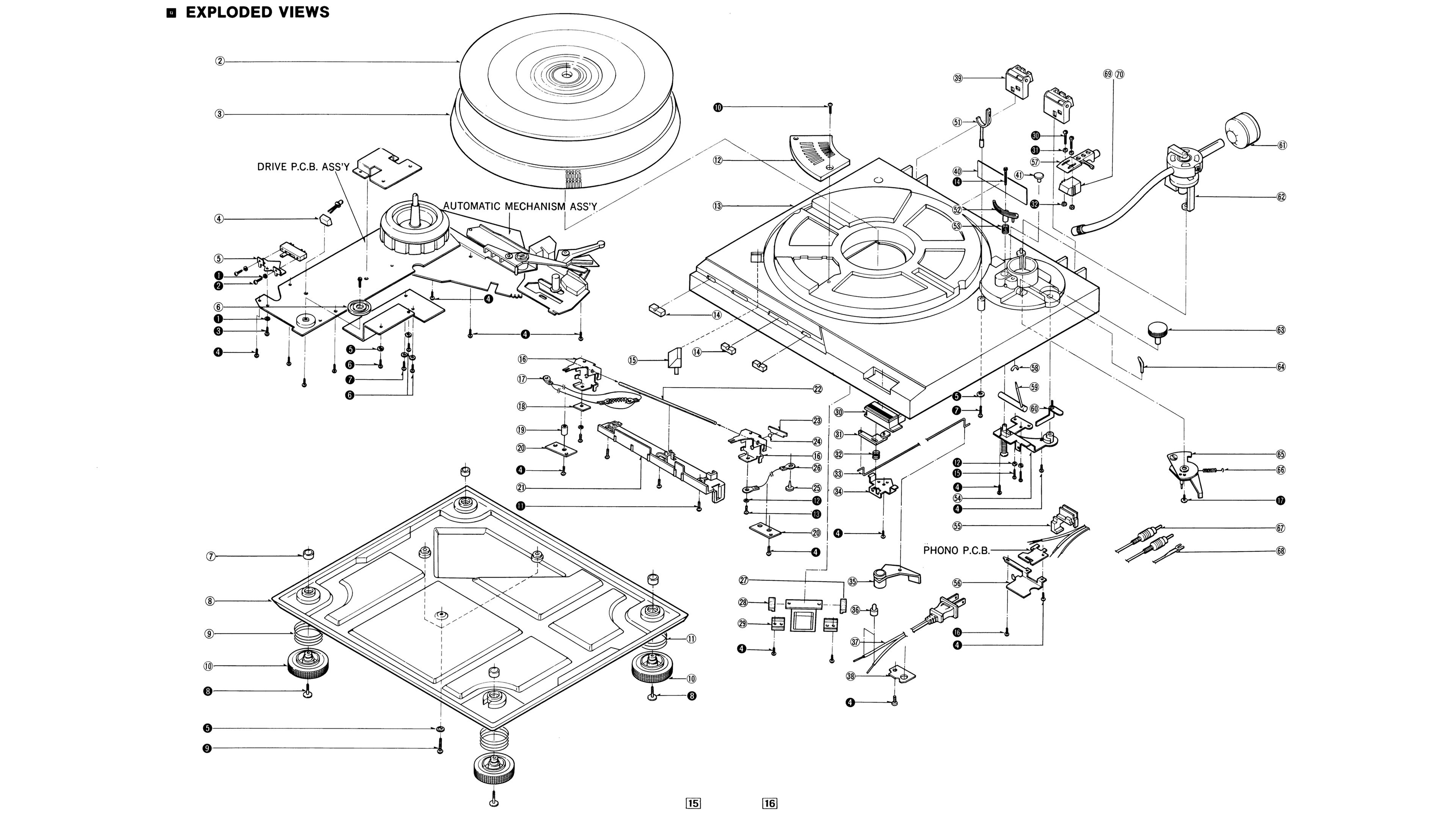
Our Technics SL-D3 turntable, which has been in the extended family since 1979 or so, recently started flaking out: the pitch control started to go unstable. I was pretty confident the root cause was a noisy speed-adjustment potentiometer, but to get to the bottom of it, I would have to take the whole thing apart.
To my delight, Technics wrote a fantastic service manual for this product. The manual covers performance specifications, disassembly and reassembly procedures, standard adjustments, and more. It includes a complete parts list for electrical and mechanical components. The electrical schematic even includes a special bonus that you only see on products from decades ago: example waveforms showing what you would expect to see on a oscilloscope if you probed various points on a functioning circuit.
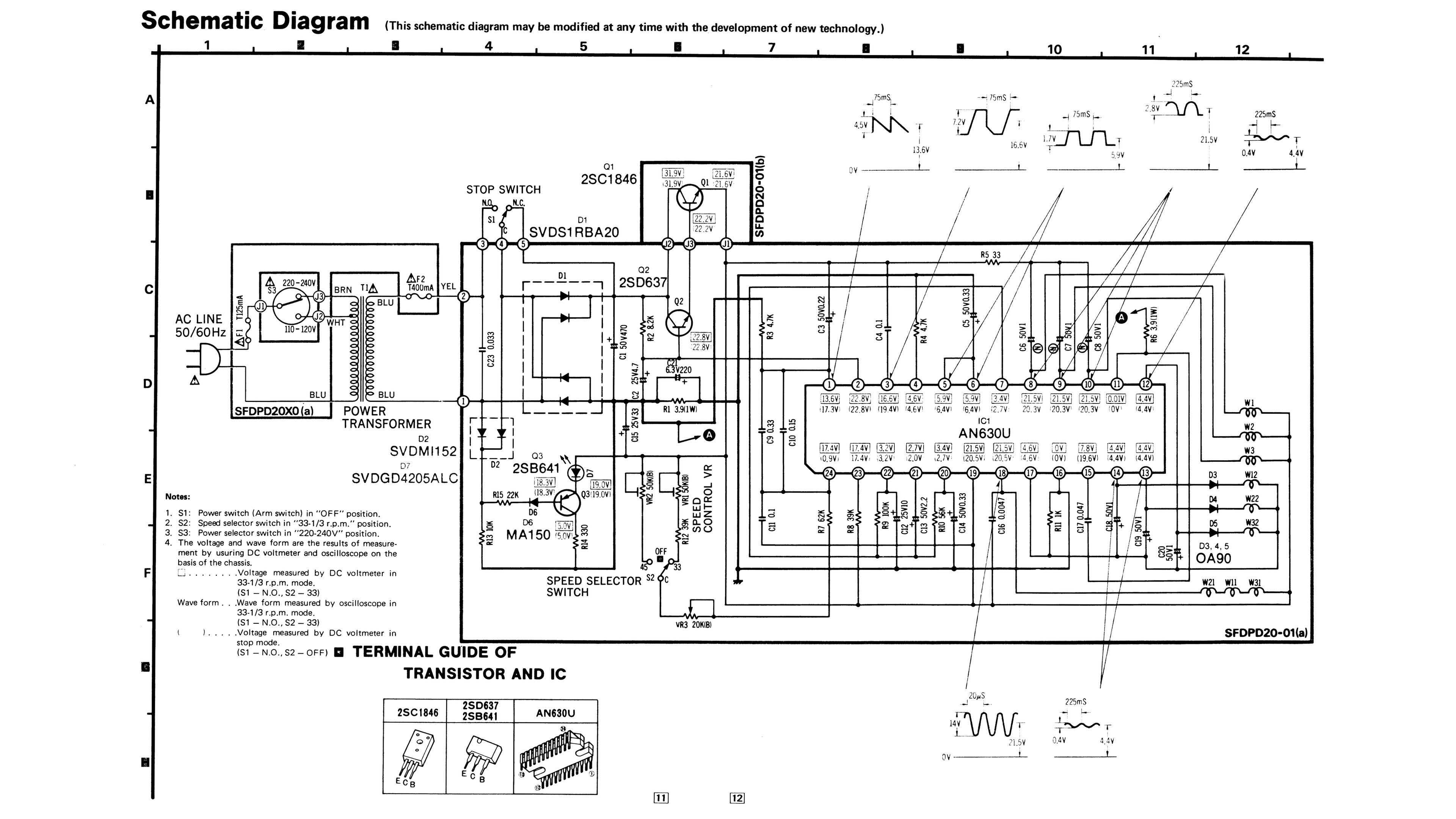
Technics understood that a customer’s ownership of this product was complete. “Right to repair” is a trendy social movement in the consumer electronics industry today, but back then, repair was an undisputed fact of ownership. Products had a long lifespan, you owned them fully, and you repaired things that were broken. Technics went out of their way to make that repair smooth and painless by sharing basically every detail of the construction.
This documentation wasn’t an afterthought, either: it was written with great intention, artistry, and eye for detail. Look closely at the images. The layout of the electrical and mechanical diagrams doesn’t reflect convenience for the designer or factory. They are not “straight out of CAD” exports. They are not copies of internal manufacturing documents. They were drafted by humans, for fellow humans, as a storytelling tool. Imagine seeing that today.
My theory was right: the speed-control potentiometer was noisy from corrosion that could be fixed with a spray of contact cleaner and a bunch of rotation. The hassle of opening up the turntable was worth it. It was an opportunity to reflect on the elegant internal construction of this surprisingly complex device. A chance to appreciate that, nearly 50 years ago, some engineers in Japan anticipated this moment and created a beautiful artifact of documentation that has survived through generations of photocopies and Internet scans. And a moment to enjoy the genuine satisfaction of fixing things yourself.